

Training Article
Training Around Illness: Don’t Be A Hero
It’s winter and that means there’s flu bugs flying around and most advice on training when ill goes one of two ways: ‘push through it’ or ‘rest until you're 100%’.
Both miss the point. In this article we'll look at when to train, when not to, and how to spend a smaller recovery budget once you're back.
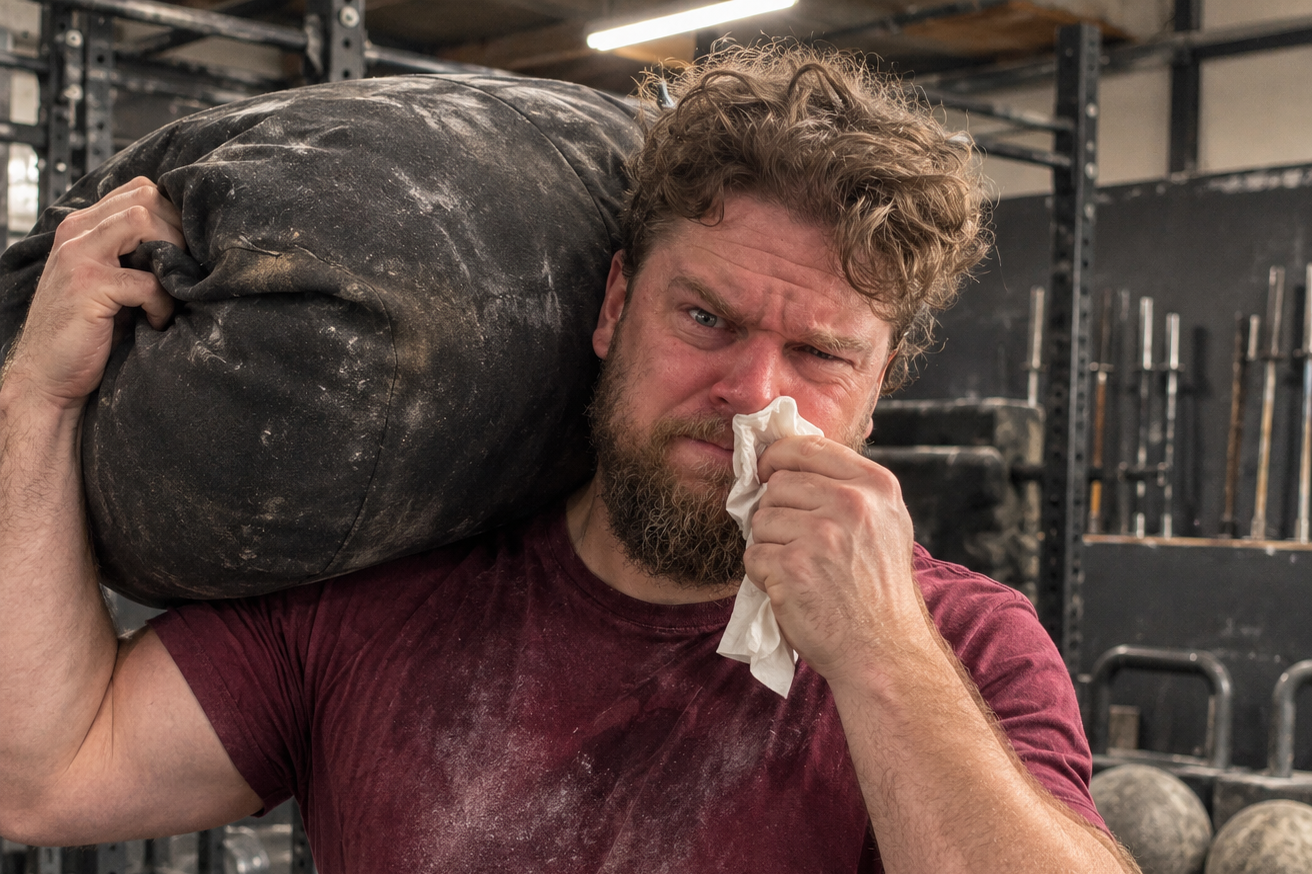
Forgive the AI slop photo, but it was better than anything I could do on Canva.
Author: Adam Johnston
Reading Time: 6 to 7 mins
Date: 26th November 2026
Tags: #Training #Strongman #OlympicWeightlifting #Powerlifting #Strength #Illness #Recovery #Coaching
Key Points:
Being ill cuts your work capacity AND your recovery capacity
Use the neck rule first: above the neck, light movement is fine; below the neck, no training
When you're back, your sport gets the smaller recovery budget first. Everything else is sidelined, not deleted
Build back gradually: one to two days for every training day you missed
Should You Train When You're Ill
Being ill doesn't just make you feel rough. It cuts your work capacity AND your recovery capacity, so the amount of training you can actually absorb drops.
So ‘should I train or not?’ is the wrong first question.
The right first question is: ‘should I be training at all?’
Step One: The Neck Rule
Above the neck (sniffles, runny nose, scratchy throat): a light walk or gentle mobility is fine.
Below the neck (chest, hacking cough, aches, fever, stomach): no training.
It's a screening heuristic, not a law. But it exists for a reason.
Sports medicine guidance uses the same "neck check". If symptoms are confined to above the neck, you can continue as long as you feel able. Start at mild to moderate intensity for 10 to 15 minutes, and if symptoms worsen, stop and rest.
If you have whole-body symptoms, such as fever, muscle aches, diarrhoea or an elevated resting heart rate, the guidance is to stay out of the gym until they've resolved. Depending on the source, that ranges from training once the fever's gone to waiting seven to 14 days after symptoms resolve.
Why a Fever Means No Training
Fever affects your body's ability to regulate temperature and increases fluid loss. Training with a fever puts you at greater risk of dehydration and heat injury.
Febrile illness also reduces muscle strength and endurance and increases fatigue. Any benefit you think you're getting from the session is questionable.
And exercising through a viral illness can prolong it and increase the risk of serious complications, including myocarditis, an inflammation of the heart muscle.
Rare, but serious. Basically it’s not worth a session.
What Illness Does to Your Recovery
Early in the illness
Your immune system floods you with inflammatory signals. Energy goes into fighting the infection, not adaptation.
Hitting leg day now isn't an edge.
It's trying to fund two projects on one budget.
Late in the illness
The worst of it passes. The inflammation doesn't.
Your tissues are dehydrated. Your sleep is in debt. Your body is still cleaning up.
This is where people tear things. They feel fine, so they load heavy.
Symptom-free is not the same as recovered.
And sleep isn't a nice-to-have here. It's where the repair happens. Treat it like a session.
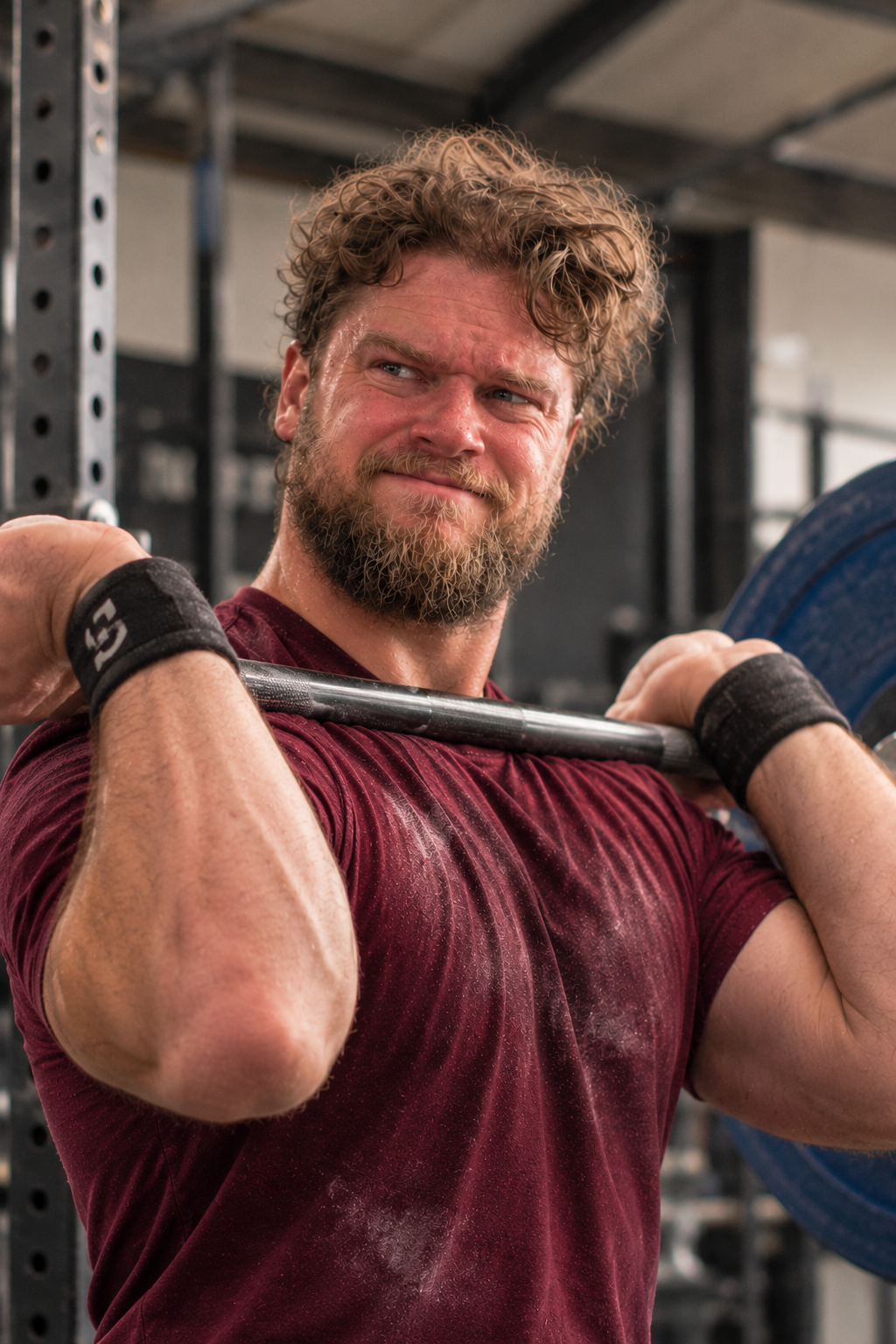
Again, apologies for the AI picture, but it does make me look good and I’m awful on Canva.
When You're Back: Spend the Smaller Budget on Your Sport
It's stupid to buy the nice jacket when you can't afford to eat and heat.
So when your budget is down, ask: what earns its spot?
Your sport is the priority.
Snatch and clean & jerk if you're a weightlifter. The events if you're a strongman or strongwoman. The comp lifts if you're a powerlifter. The court or the pitch if you play basketball, football or another team sport.
Everything else gets sidelined or done at lower volumes. Accessories. Variations. Extra conditioning. The nice-to-have stuff.
Sidelined, not deleted. It'll all still be there when you're well.
What Your First Session Back Looks Like
Weightlifters: work up to a few singles at around 80% in the snatch and the clean & jerk. Stop while it's still fast. One front squat top set. Drop the pulls and extra squat volume.
Strongmen and strongwomen: keep the event work, cut the load to roughly 70% of normal, and cut the reps. Drop the accessories.
Powerlifters: comp squat, bench and deadlift only. Three sets of 3 at 75-80%. No variations, no AMRAPs.
Team-sport athletes: keep skill work and one low-volume sprint or jump session. Drop the extra conditioning and heavy leg hypertrophy.
Everyday athletes: two main lifts, roughly 10% under normal loads. Leave the rest.
Same rule for all of you. Stop every set with reps in the tank.
Practical Application & Takeaways / How to Run It
Build back up gradually. Take one to two days for every training day you missed.
Missed four sessions? Give yourself four to eight days to get back to normal.
In practice:
1. Run the neck check. Below the neck or a fever means no training.
2. Don't confuse symptom-free with recovered.
3. Spend your smaller budget on your sport and sideline the rest.
4. Stop every set with reps in the tank, then build back over the days you missed.
And if you're contagious, sweating it out doesn't sweat out the virus. It just spreads it around your gym. Resting may save someone else the illness.
Final Thoughts
Push through with everything and you lose twice. Rubbish sessions now, then a deeper hole to climb out of later.
You don't suddenly get weaker because you rested four or five days.
The problem is that you're the one deciding what to cut, while feeling guilty and impatient. That's exactly when judgement is worst.
This article is general information for healthy athletes, not medical advice. If you're unsure whether you're fit to train, speak to your GP.

About the author
Adam is a strength coach and the Head Coach of Savage Strength.
He helps lifters get brutally strong through simple, effective training with a speciality in Olympic Weightlifting and Strongman.
If you want coaching tailored to you and your goals, let’s get started with personalised programming designed to get you stronger.
Sources and Further Reading If you Want It
• Febrile Illness in the Athlete
• Exercise and febrile illnesses, Canadian Paediatric Society, Paediatrics & Child Health, December 2007