

Training Article
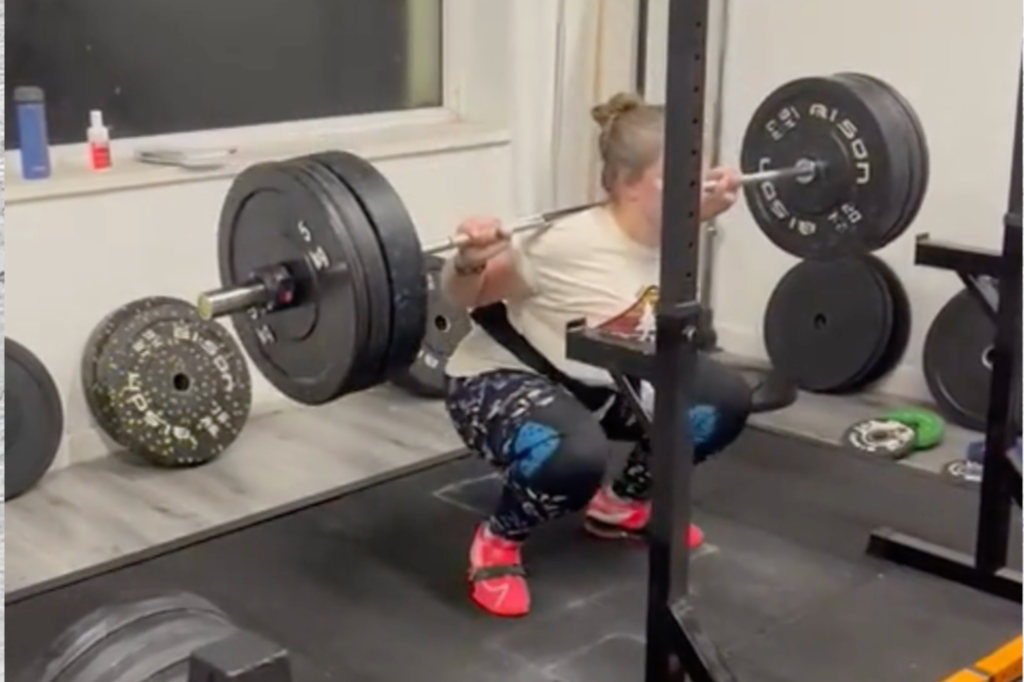
Find Your Ideal Squat Stance
Human bodies are complex.
Joint structure and limb lengths vary from person to person and while two lifters can look similar standing upright they may need to employ different techniques once they start their squat.
That’s why copying someone else’s squat stance usually isn’t the right thing to do, but how do you know what stance to employ?
Read on and I'll tell ya.
Author: Adam Johnston
Reading Time: 4-5 mins
Date: 15th January 2026
Tags: #SquatTechnique #Strongman #OlympicWeightlifting #Powerlifting #StrengthTraining #Coaching #Movement
Key Points:
There is no universal best or right squat stance
Hip structure and proportions will dictate how you squat, so stop fighting it
Comfort at depth is meaningful feedback
Your body can self-organise when constraints are removed
A simple exploration method often reveals the right stance quickly
The best squat stance for you is probably the one you feel most comfortable in at the bottom. Not because it’s easy, but because it matches your anatomy.
Why “Perfect Squat Stance” doesn’t exist
Most squat advice assumes everyone should squat with roughly the same foot width and toe angle.
‘Hip to shoulder width, toes pointed slightly out’.
But that assumption ignores anatomy.
Acetabulum depth, femur length, femoral neck angle, and pelvic shape all influence how your hips move in flexion. If your stance is fighting against your structure, you’ll feel it as pinching, shifting, instability, inconsistency at depth and generally a struggle and unenjoyable.
And it’s not something you can stretch or mobilise away.
Bodies Are Complex, But They’re Smart
While the human structure is complex, the nervous system is good at solving movement problems when it’s allowed to.
When you remove rigid rules and let yourself explore the bottom position, your body naturally finds a stance that:
Allows depth without forcing it
Feels balanced through the mid-foot
Lets the hips settle without tension
Is repeatable under load
This is self-organisation. It’s not random. It’s your structure finding the most efficient option available.
How the Bottom Position Reveals Your Stance
By starting with your heels raised and your back relaxed, you temporarily remove restrictions.
From there, small movements allow your hips to organise themselves. As that happens, your feet adjust naturally. When your heels settle and the position feels stable, you’ve usually landed close to your ideal stance.
That position is specific to you and it tends to hold up better when the weight increases than one picked from arbitrary preferences or following generalised advice.
Practical Application & Takeaways / How to Run It
Use this method at the start of squat sessions to confirm stance or to find a stance if you’re a complete beginner.
Revisit it if something feels off, unstable, or inconsistent
Expect your stance to differ from training partners
Comfort at depth is what we’re looking for
Stop forcing positions you have to think about constantly
Final Thoughts
If your squat squat stance feels off, it probably is.
Bodies differ, but they’re good at organising themselves when given the chance. This is a quick, low-effort way to find a squat stance that fits your specific anatomy and holds up when the bar gets heavy.
Simple beats clever.

About the author
Adam is a strength coach and the Head Coach of Savage Strength.
He helps lifters get brutally strong through simple, effective training with a speciality in Olympic Weightlifting and Strongman.
If you want coaching tailored to you and your goals, let’s get started with personalised programming designed to get you stronger.